Portugal's Spectacular South Coast
The Algarve is Portugal's southernmost region, a 155-kilometre coastline facing the Atlantic that divides neatly into two distinct landscapes. The western Algarve, from Sagres to Lagos and east to Albufeira, is the dramatic part: sculpted golden limestone cliffs, sea arches, rock stacks, and sea caves carved by the Atlantic into formations that have no parallel elsewhere in Europe. The eastern Algarve, from Faro to the Spanish border, is flatter, wilder, and less visited, dominated by the Ria Formosa lagoon, a protected coastal wetland of barrier islands and tidal marshes.
The Algarve draws millions of visitors every summer for the obvious reasons, but rewards those who come outside peak season or venture beyond the resort beaches. The inland Algarve, the Serra de Monchique hills and the Alentejo border towns, is almost completely undiscovered and offers a completely different face of the south. The western Algarve's big wave surf scene at Sagres runs through the winter months and draws an international community of surfers to a coast that is nothing like the beach resort version of summer.
Top Things to Do in the Algarve
1. Benagil Sea Cave
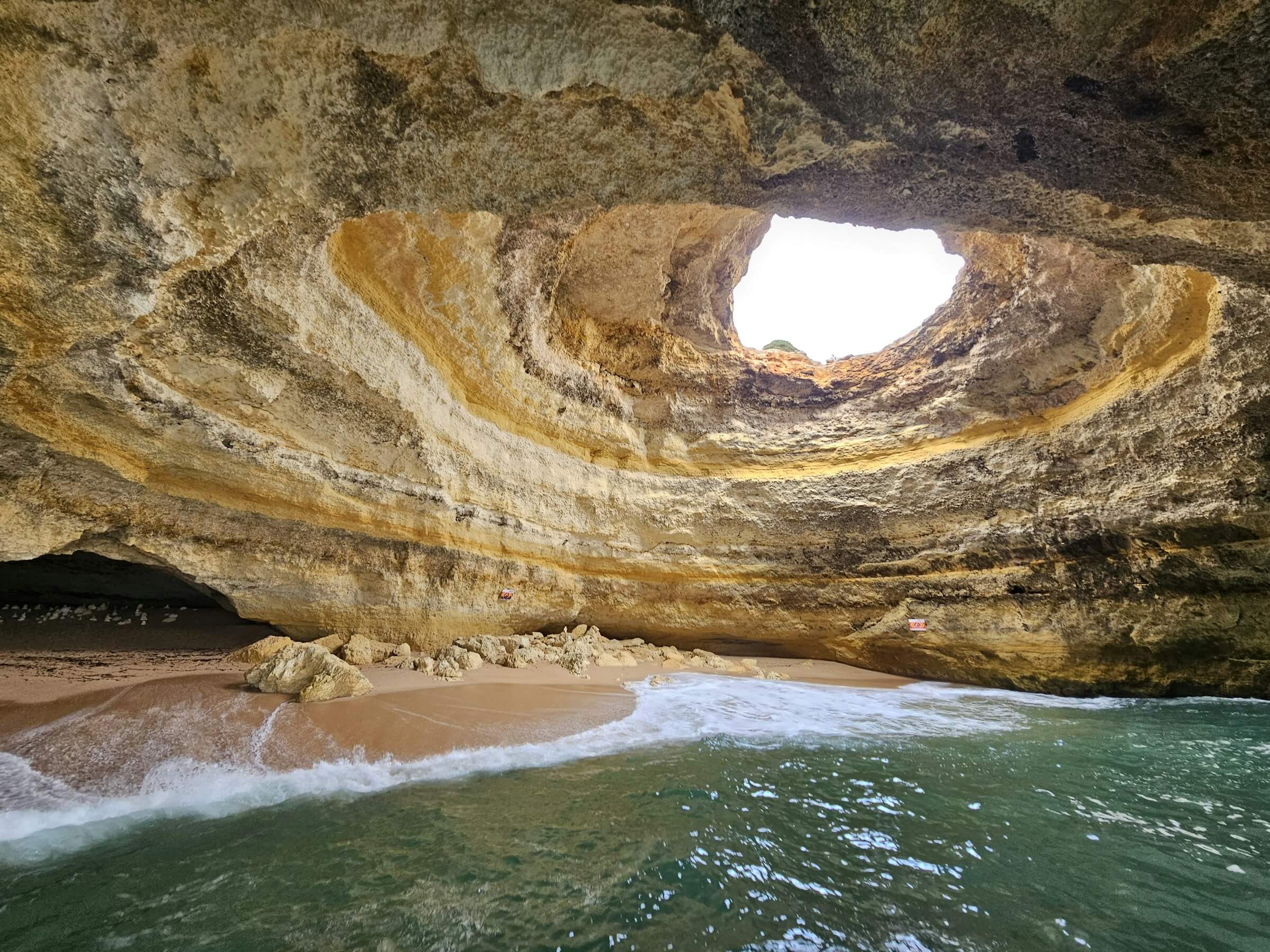
The most spectacular natural attraction in the Algarve and arguably in Portugal. The Gruta de Benagil is a cathedral-domed sea cave with a circular oculus open to the sky and a sand beach at its floor, accessible only by sea. Boat tours depart regularly from Benagil beach and from Carvoeiro village. The cave is best seen in the morning, when the sunlight streams down through the oculus onto the sand. Stand-up paddleboard tours allow you to enter independently; check sea conditions before committing.
2. Ponta da Piedade, Lagos
The most dramatic rock formation on the Algarve coast is the Ponta da Piedade headland just south of Lagos: a labyrinth of amber-coloured sea stacks, grottos, arches, and narrow sea lanes best navigated by kayak or small motor boat. The boat tours from Lagos run year-round on calm days and take 45 minutes to two hours depending on route. The clifftop path above the formations has the best views and is free to walk; the wooden staircase down to the rocks leads to a small beach accessible at low tide.
3. Lagos Old Town
Lagos was the departure point for many of Portugal's early Atlantic explorations, and the town's 16th-century fortified walls, the Gil Eanes square, and the Igreja de Santo António (a remarkable baroque gold interior) tell the story well. The slave market building on the Praça da República, now a museum, documents a darker chapter. The town is the most interesting urban centre in the western Algarve, with a good selection of restaurants and bars, and serves as the best base for exploring Ponta da Piedade and the beaches to the south.
4. The Ria Formosa Natural Park
The eastern Algarve's great natural treasure is the Ria Formosa, a 60-kilometre chain of barrier islands, tidal inlets, mudflats, and saltpans stretching from west of Faro almost to the Spanish border. The park is home to rare coastal birds, seahorses, and flamingoes in winter. Boat tours from Faro take you through the lagoon channels to the island beaches of Ilha Deserta (genuinely uninhabited) and Ilha da Culatra. A slower alternative is the passenger ferry from Faro to Ilha da Culatra, where a single restaurant serves extraordinary grilled fish from the morning's catch.
5. Sagres & Cabo de São Vicente
The far southwest of the Algarve feels like the edge of the world and historically was considered exactly that. Cabo de São Vicente is the southwesternmost point of continental Europe: a 75-metre sea cliff topped by a lighthouse, with Atlantic views unbroken to the horizon in three directions. The Fortaleza de Sagres, Prince Henry the Navigator's fortified promontory, is where Portugal's 15th-century age of exploration was planned and organised. The town of Sagres, small and wind-scoured, is the centre of the western Algarve surf scene and a very good base for exploring the wild coast north toward Aljezur.
6. Algarve Beaches
The Algarve's beaches divide broadly into sheltered cove beaches (praias) behind limestone headlands in the west, and longer open Atlantic beaches in the centre and east. The most photographed are Praia da Marinha (near Carvoeiro, small and flanked by dramatic rock formations), Praia de Dona Ana (near Lagos, classic Algarve cove), and Praia da Falesia near Albufeira (a long open beach beneath orange-red clay cliffs). For emptier beaches and wilder surf, the Vicentina coast north of Sagres has kilometre-long beaches that rarely become crowded even in summer.
Best Algarve Tours
 GetYourGuide
Benagil Cave & Coast Boat Tour
Into the famous domed sea cave and through sea arches and hidden grottos along the Algarve coast. Departures from Carvoeiro and Benagil beach.
Book on GetYourGuide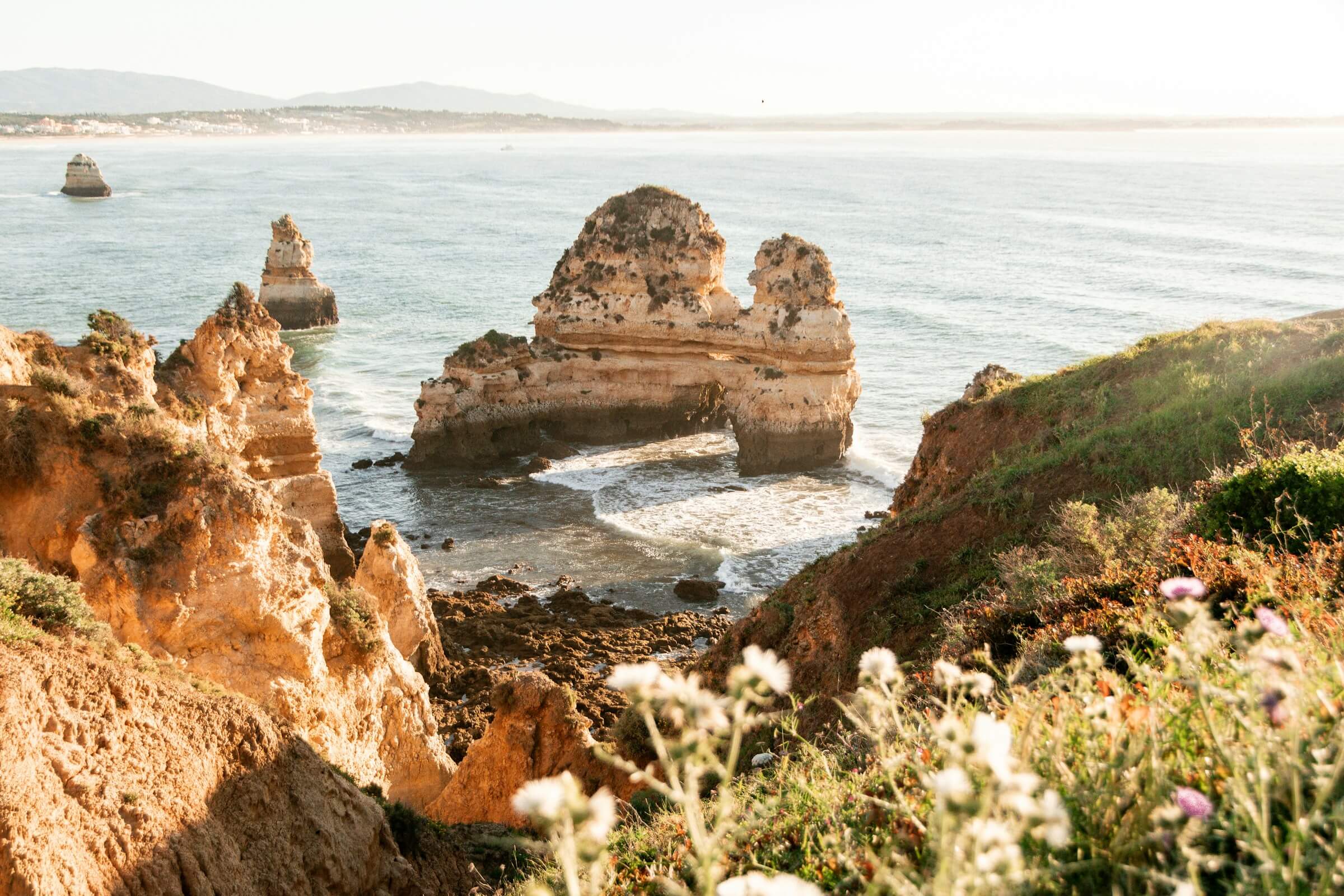 Viator
Ponta da Piedade Kayak Tour, Lagos
Guided kayak through the sea stacks, tunnels, and grottos of Portugal's most dramatic coastal formation. Small groups, experienced guides.
Book on ViatorGetting Around the Algarve
A rental car is essential for exploring the Algarve properly. The Via do Infante motorway (A22) runs the length of the coast from the Spanish border to beyond Lagos, making east-west journeys fast. The coastal roads below the motorway are far more scenic and not dramatically slower for shorter distances. There is a train line connecting Faro to Lagos in the west (one hour) and Vila Real de Santo António on the Spanish border in the east. For the beaches themselves, local buses and taxis are adequate in peak season; in winter or off the main routes, a car is the only practical option.
Best Time to Visit the Algarve
June to September is peak season: hot, busy, and expensive. July and August bring the crowds and the highest prices, but also the best weather for swimming. May and October are excellent alternatives: warm, sunny, far fewer visitors, and the sea still swimmable. The winter surf season (October to March) brings Atlantic swells and empty beaches. Golf is popular year-round, and the Algarve's inland countryside and hill towns are best visited in spring when the cistus and mimosa are in flower.