Portugal's Romantic Mountain Retreat
The Serra de Sintra rises out of the Atlantic coast just west of Lisbon: a granite massif permanently cooled by Atlantic fog that rolls in from the sea and keeps the vegetation lush year-round even in the Portuguese summer. The combination of mild climate, dense forest, and dramatic granite peaks made Sintra a retreat for the Portuguese royal family for centuries, and the palaces, estates, and follies they built are now the core of a UNESCO World Heritage Cultural Landscape.
Sintra is very easy to visit from Lisbon on a day trip by train, which is both its great advantage and its main problem: the town becomes extremely busy in summer, and the main attractions require advance ticket booking to avoid multi-hour queues. Go early, book online, and visit mid-week if possible. Two days in Sintra allows you to do justice to the main palaces and still explore the quieter corners of the serra on foot.
Top Things to Do in Sintra
1. Pena Palace
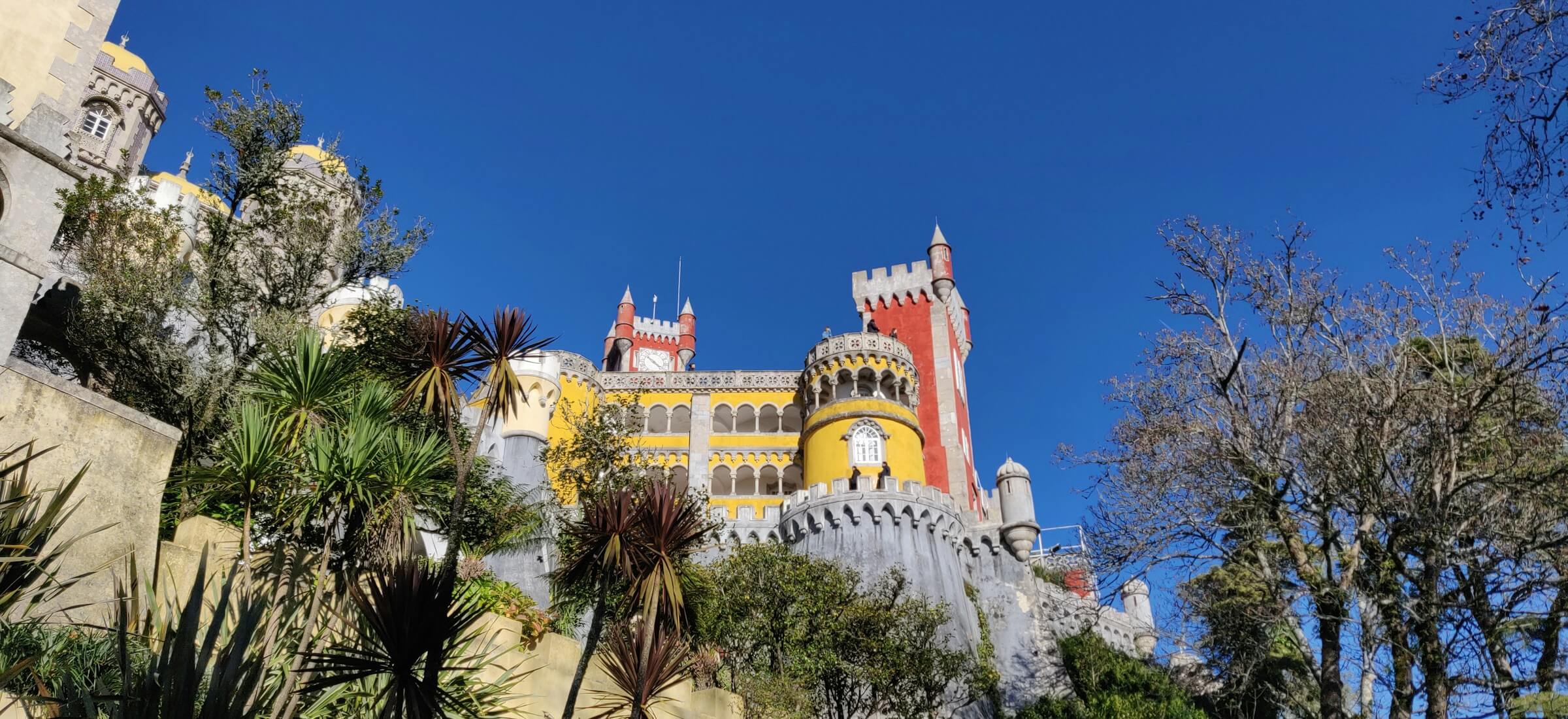
The Palácio da Pena is the most dramatic building in Portugal: a Romanticist royal palace completed in 1854 on the ruins of a 16th-century monastery, painted in saffron and deep terracotta, with battlements, minarets, gargoyles, and a moat. It was designed to be visible from Lisbon on clear days. The interior, largely intact in its Victorian-era furnishings, gives an extraordinary picture of 19th-century royal life. The palace is set within a 200-hectare park containing exotic trees, fountains, and walking trails; the park alone is worth the ticket on a sunny day.
2. Quinta da Regaleira
The most mysterious and photogenic estate in Sintra was built at the turn of the 20th century for a wealthy eccentric with interests in alchemy, Freemasonry, and Rosicrucian symbolism. The neo-Gothic palace is surrounded by a garden filled with grottos, underground tunnels, a chapel, and the extraordinary Initiatic Well: a 27-metre spiral staircase descending nine levels into the earth (nine representing the circles of Inferno in Dante's cosmology), connected by subterranean passages to other parts of the estate. Arrive at opening time to explore the tunnels before the crowds arrive.
3. Castelo dos Mouros (Moorish Castle)
The Moorish Castle, built between the 8th and 9th centuries by North African settlers and later captured by Dom Afonso Henriques in 1147, crowns one of the granite peaks above Sintra town. Its restored battlements and towers offer views across the forest to the sea in one direction and to the Pena Palace in the other. The walk up through the forest from the town takes around 45 minutes and is much more pleasant than the bus; the descent via a different route passes through Regaleira.
4. Palácio Nacional de Sintra
The National Palace of Sintra stands at the centre of the old town, identifiable from miles away by its two enormous conical chimneys, each 33 metres tall, rising from the royal kitchen. Unlike the hilltop palaces, this one requires no uphill walking. The interior includes the Sala dos Brasões (the Hall of Coats of Arms) with a remarkable coffered ceiling, the Sala das Pegas (Magpie Room, painted with a magpie for each lady at court, as a reference to court gossip), and extensive Moorish and Manueline tilework. One of Portugal's most interesting palace interiors.
5. Cabo da Roca & Cascais
The westernmost point of continental Europe is 16 kilometres from Sintra along a road that crosses the moorland of the Sintra-Cascais Natural Park. Cabo da Roca is a lighthouse on a 140-metre clifftop with an unobstructed view west across the Atlantic. It is windy, dramatic, and often cold even in summer. Bus 403 from Sintra connects to both Cabo da Roca and Cascais, making a half-day western loop from Sintra entirely feasible without a car. Cascais itself, a former royal fishing village on the Estoril Coast, has a good old town, a busy marina, and excellent seafood restaurants.
6. Palácio de Monserrate
The most undervisited of Sintra's major estates is the Monserrate Palace, a 19th-century Moorish-Gothic fantasy designed for a wealthy English collector, surrounded by one of Portugal's finest botanical gardens containing over 3,000 species from across the world. The palace interior is extraordinary, filled with Moorish stucco work of the highest quality. Because it takes slightly more effort to reach (a 30-minute walk or tuk-tuk from the town), it is dramatically less crowded than Pena or Regaleira.
Best Sintra Tours
 Viator
Sintra, Cascais & Cabo da Roca Day Tour
The classic full-day tour from Lisbon. Pena Palace, the westernmost point of continental Europe, and Cascais in a single well-organised day.
Book on Viator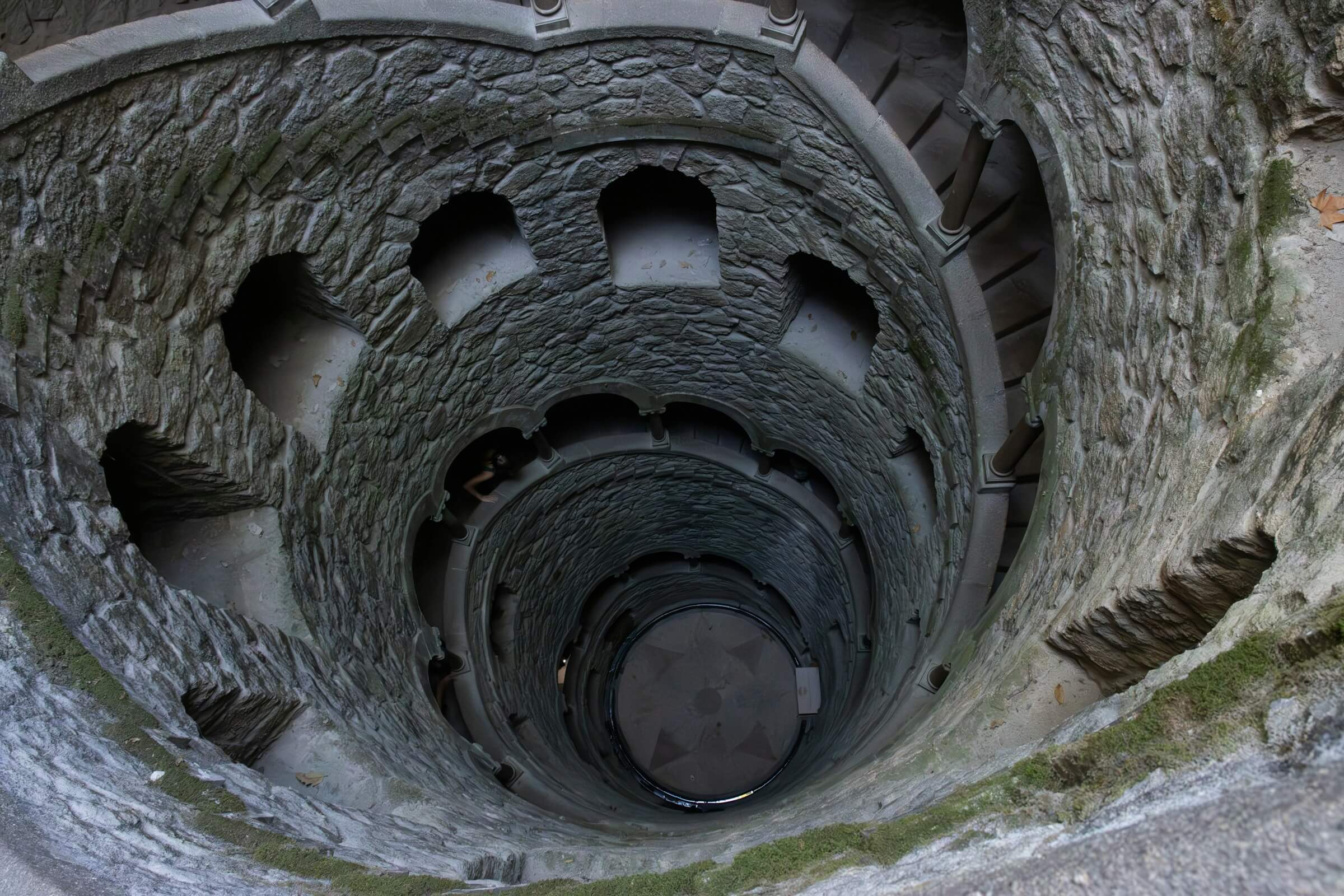 GetYourGuide
Quinta da Regaleira Evening Tour
The initiatic well and underground tunnels by night, when the estate is lit and the crowds have gone. One of Sintra's most atmospheric experiences.
Book on GetYourGuideGetting to & Around Sintra
The train from Lisbon Rossio station to Sintra takes 40 minutes and runs frequently throughout the day. A return train ticket is inexpensive and the journey is pleasant. Within Sintra, the historic town centre is compact and walkable; the main palaces above town require either a steep 30 to 45-minute walk up through the forest, local bus connections (434 circuit bus), or a tuk-tuk or taxi for those unwilling to hike. Book palaces and estates online in advance, particularly for Pena and Regaleira in summer; queues without tickets can exceed 90 minutes.
Sintra Practical Tips
Sintra can be done as a half-day or full-day trip from Lisbon, but the full day allows a more relaxed pace. The town becomes crowded by 10am in summer; aim to be at Pena Palace when it opens. The local pastry, travesseiro (a flaky pastry filled with egg cream and almond), is sold at the Casa Piriquita bakery in the old town and is very good. Evenings in Sintra are quieter, cooler, and atmospheric; if you stay overnight, book a small guesthouse in the old town and the place transforms after the day-trippers leave.